
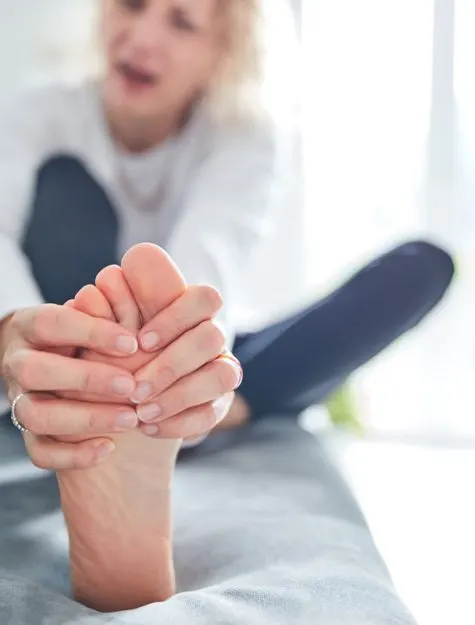
Morton's Neuroma
Burning pain between the toes, numbness, or the feeling of a pebble in your shoe: what causes it and how our podiatrists treat it.
What Is Morton's Neuroma?
Morton's neuroma is a painful thickening of the tissue around one of the small nerves that run between the long bones of the forefoot (the metatarsals) on their way to the toes. Despite the name, it is not cancer and not a true tumor. Doctors describe it as perineural fibrosis: the interdigital nerve is squeezed and irritated over and over, and the tissue around it thickens and scars.
Morton's neuroma most often develops between the third and fourth toes, and less often between the second and third. Each time you push off the ground, that nerve can be pinched between the metatarsal bones and the ligament that connects them. That is why symptoms usually build with walking, standing and tight shoes, and ease when you rest and take your shoes off.
Morton's Neuroma Symptoms
Symptoms often start mildly and come and go. Over time, flare-ups may become more frequent and last longer. Common Morton's neuroma symptoms include:
- Burning pain in the ball of the foot that may spread into the two neighboring toes
- A "pebble in the shoe" feeling, as if you are standing on a small stone, a marble or a fold in your sock
- Numbness, tingling or "pins and needles" in the toes
- Sharp or shooting pain between the toes when walking, especially in narrow or high-heeled shoes
- Relief when you stop, take off your shoe and rub the front of your foot
Most people do not see a lump or much swelling, because the thickened nerve sits deep between the bones. Keep in mind that pain between the toes or a burning ball of the foot can also come from other problems, such as metatarsalgia, joint inflammation, arthritis or a stress fracture. A proper exam is the best way to know what is really going on.
What Causes Morton's Neuroma? Risk Factors
The exact cause is not fully understood, but most experts agree that repeated pressure and irritation of the nerve play the main role. Factors that raise your risk include:
- Tight, narrow or pointed shoes that squeeze the toes and metatarsal bones together
- High heels, which shift your body weight onto the forefoot with every step
- High-impact sports such as running, tennis and other court sports, or activities that use snug footwear, like skiing or rock climbing
- Foot shape and deformities, including bunions, hammertoes, high arches and flat feet, which can change how pressure is spread across the forefoot
- Long hours on your feet at work, especially on hard floors
- A previous injury to the forefoot
Morton's neuroma is more common in women, which is likely related in part to footwear choices such as high heels and narrow toe boxes.
How a Podiatrist Diagnoses Morton's Neuroma
Diagnosis starts with a conversation about your symptoms, your activities and the shoes you wear most. Your podiatrist will then examine your foot, pressing gently between the metatarsal bones to find the tender spot and check for numbness in the toes.
A common part of the exam is checking for Mulder's sign. The podiatrist squeezes the forefoot from side to side while pressing on the space between the affected toes. A clicking sensation along with your familiar pain supports the diagnosis of a neuroma.
Imaging is used when it is needed. X-rays do not show the nerve itself, but they help rule out other causes of forefoot pain, such as a stress fracture or arthritis. Our offices offer digital X-rays, so this can often be done during the same visit. If the diagnosis is still unclear, or if surgery is being considered, your podiatrist may recommend an ultrasound or MRI to take a closer look at the soft tissues.
Morton's Neuroma Treatment: From Simple Steps to Surgery
The good news is that many people with Morton's neuroma improve with conservative (non-surgical) care, especially when treatment starts early. The goal is to take pressure off the nerve and calm the irritation. Treatment usually begins with the simplest options and moves step by step only if symptoms continue.
Footwear Changes
Switching to shoes with a wide, deep toe box, a low heel and a cushioned, shock-absorbing sole is often the first and most important step. Shoes with laces or straps let you adjust the fit so the forefoot is not squeezed. Limiting time in high heels and tight dress shoes can make a real difference.
Metatarsal Pads
A small metatarsal pad placed just behind the ball of the foot can help spread the metatarsal bones slightly and take pressure off the nerve. Placement matters, so it helps to have your podiatrist show you exactly where the pad should sit.
Custom Orthotics
Custom orthotics are shoe inserts made from a model of your feet. They can support the arch, improve how weight moves across the forefoot and reduce stress on the irritated nerve. Orthotics can be especially helpful if foot shape, such as flat feet or high arches, is part of the problem.
Anti-Inflammatory Medication and Ice
Over-the-counter anti-inflammatory medication may help ease pain and irritation for a short period. Icing the area and resting from activities that trigger symptoms can also help. Ask your doctor or pharmacist before taking any medication, especially if you have other health conditions or take other medicines.
Corticosteroid Injections
When symptoms continue, your podiatrist may suggest a corticosteroid injection near the affected nerve to reduce inflammation and pain. Injections can provide relief for many patients, but they are usually limited in number, because repeated steroid injections can have side effects such as thinning of the protective fat pad under the foot.
Physical Therapy
In-office physical therapy can support your recovery with calf and foot stretching, strengthening of the small muscles of the foot, and guidance on walking and activity changes that reduce pressure on the forefoot.
Surgery When Conservative Care Fails
If several months of conservative treatment do not bring enough relief, surgical care may be considered. The two main approaches are a neurectomy, which removes the affected section of the nerve, and a decompression, which releases the ligament that presses on the nerve. These procedures are usually done on an outpatient basis. After a neurectomy, some permanent numbness between the affected toes is expected. Your podiatric surgeon will explain the options, the possible risks and what recovery will look like for you.
Recovery: What to Expect
With conservative care, many people notice improvement within several weeks, although it can take a few months for symptoms to settle fully. Sticking with better shoes, pads or orthotics is key, because going back to tight footwear often brings the pain back.
After surgery, you will typically wear a protective shoe or boot at first and return to regular, roomy shoes gradually over the following weeks. Returning to running or high-impact sports usually takes longer. Your surgeon will give you instructions based on the procedure and your progress, and following them closely helps protect the healing area.
How to Prevent Morton's Neuroma
- Choose shoes with a wide toe box, good cushioning and a low heel for everyday wear
- Save high heels and narrow shoes for short periods
- Use metatarsal pads or custom orthotics if your podiatrist recommends them
- Pay attention to early warning signs, like tingling or burning after long walks, and get them checked
When to See a Podiatrist
Do not wait for forefoot pain to become constant. Early care gives you the best chance of relief without surgery. Make an appointment with a podiatrist if:
- Burning, tingling or numbness in your toes lasts more than a few days or keeps coming back
- Pain between your toes makes it hard to walk, work or exercise
- Changing your shoes and resting has not helped
- You have diabetes or poor circulation and notice any new numbness or pain in your feet
The podiatrists at Southernmost Foot & Ankle Specialists diagnose and treat Morton's neuroma and other causes of forefoot pain at our offices in Key West, Homestead and Coral Gables, Florida. Walk-ins are welcome. Call us toll-free at 855-300-6685 or request an appointment online.
Morton's Neuroma FAQ
Can Morton's neuroma go away on its own?
Mild cases may settle down with better shoes, padding and rest, especially when caught early. Without changes, symptoms often continue or get worse over time, so it is worth having your foot checked.
Is Morton's neuroma serious?
It is not cancer and does not spread, but it can be very painful and limit how much you walk, work or exercise. Getting an accurate diagnosis also rules out other causes of forefoot pain.
What kind of shoes are best for Morton's neuroma?
Look for shoes with a wide, deep toe box, a low heel, good cushioning and laces or straps that let you adjust the width. Your podiatrist can also recommend inserts, pads or custom orthotics.
What is the difference between Morton's neuroma and metatarsalgia?
Metatarsalgia is a general term for pain and inflammation in the ball of the foot, and it has many possible causes. Morton's neuroma is one specific cause, involving an irritated nerve between the toes, and it often brings numbness or tingling in the toes. Learn more about metatarsalgia.
Will I need surgery?
Most people do not. Surgery is usually considered only when conservative treatments, such as footwear changes, pads, orthotics, injections and physical therapy, have not brought enough relief.
Committed to Excellent Service
Our philosophy has been that the patient always comes first.
Walk-ins are welcome at our Coral Gables, Homestead and Key West offices.