
Fracture Care
Care for a Foot Fracture or Ankle Fracture
A break in any bone of the foot or ankle, from a small toe bone to the ankle joint, can make walking painful and needs proper care to heal well. At Southernmost Foot & Ankle Specialists, fracture care is one of our core services. We evaluate injuries, confirm the diagnosis with in-office imaging and guide you through healing and back to your normal activities. For a general overview of how fractures happen, see our fractures page.
Common types of foot and ankle fractures
- Stress fractures. Tiny cracks that develop gradually from repeated impact, often in the metatarsals (the long bones of the midfoot). They are common in runners and in people who suddenly increase their activity.
- Jones fracture. A break in a specific area near the base of the fifth metatarsal, the bone on the outside of the foot that leads to the little toe. This area has a limited blood supply, so a Jones fracture can be slower to heal and needs close follow-up.
- Other fifth metatarsal fractures. An ankle roll can also pull off a small piece of bone at the base of the fifth metatarsal, a different injury from a Jones fracture that is usually treated differently.
- Toe fractures. Often caused by stubbing a toe or dropping something heavy on the foot. A broken big toe or a toe that looks out of place should always be checked.
- Ankle fractures. Breaks in one or more of the bones that form the ankle joint, usually from a twist, fall or sports injury. They range from a small, stable crack to a break that affects the alignment of the joint.
- Sesamoid fractures. The sesamoids are two small bones under the ball of the foot, below the big toe. They can break from a hard landing or from repeated stress.
Is it a fracture or a sprain?
A sprain injures ligaments, while a fracture involves the bone, and the two can feel very similar at first. Signs that point toward a possible fracture include:
- Pain directly over a bone that is sharply tender to the touch
- Significant swelling and bruising that develop quickly
- Trouble putting weight on the foot or taking more than a few steps
- A visible bump, deformity or a toe or ankle that looks out of line
- Pain that keeps getting worse instead of slowly easing
The only reliable way to tell the two apart is an exam, usually with an X-ray. Walking on an untreated fracture can make it worse.
Walk-in evaluation and in-office digital X-rays
Walk-ins are welcome at our Key West, Homestead and Coral Gables offices, so you do not need to wait for an appointment to have a possible broken foot or ankle looked at. Your podiatrist will examine the injury and can take digital X-rays in the office, often during the same visit. The images show whether a bone is broken and whether the pieces have shifted, which guides treatment.
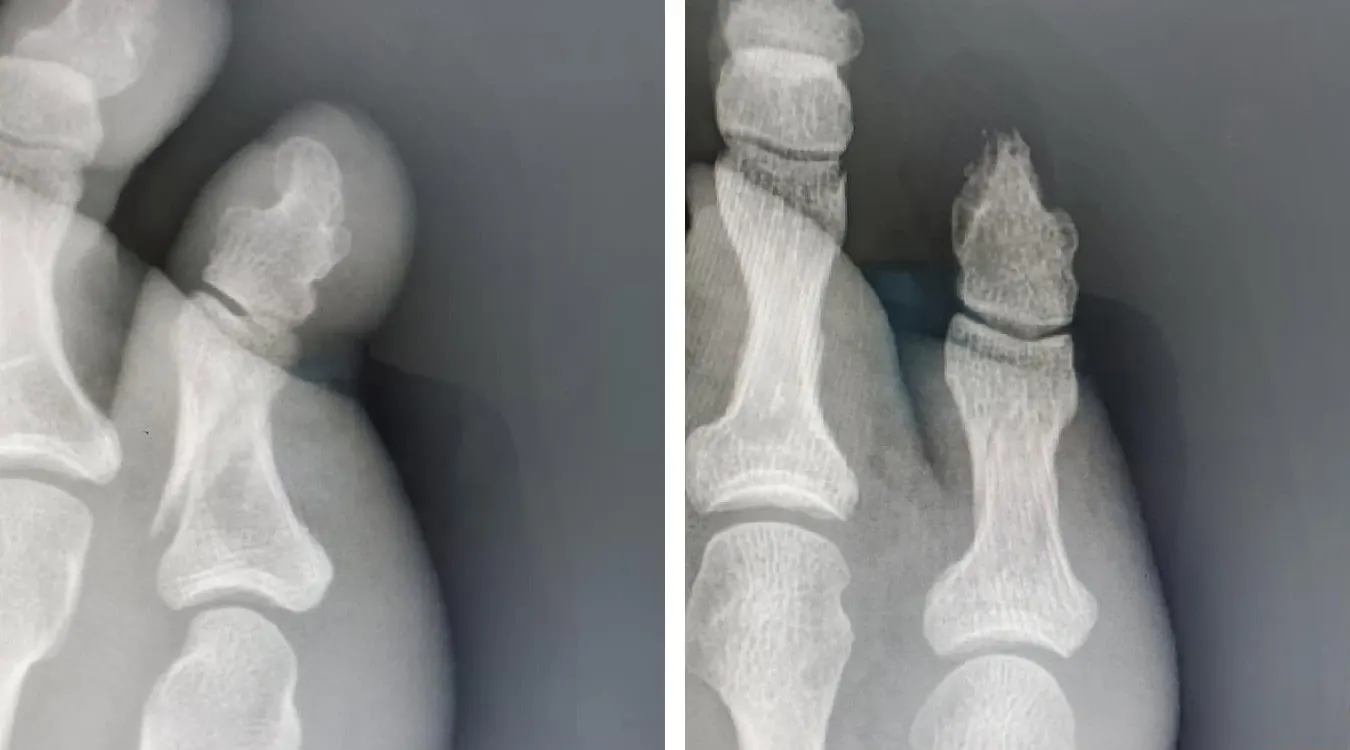
Broken Foot Treatment Without Surgery
Many fractures heal well with protection and time.
When the bone is stable and the pieces remain in good position, a foot or ankle fracture can often be treated without surgery. Depending on the injury, your care may include:
- Immobilization in a walking boot, cast, splint or stiff-soled shoe to keep the bone still while it heals
- Crutches or another walking aid to take weight off the foot
- Protected weight bearing, adding weight gradually as your podiatrist advises
- Rest, ice and elevation to control early swelling
- Follow-up X-rays to confirm the bone is healing in the right position
Following the weight bearing instructions closely is one of the most important parts of healing.
Think you may have a broken foot or ankle? Walk-ins are welcome. Come see a foot and ankle specialist from the start.
When a Fracture Needs Surgery
Some breaks need to be realigned and held in place.
Surgery may be recommended when the pieces of bone have shifted out of place (a displaced fracture), when a break involves the ankle joint and affects its stability, or when a fracture is not healing as expected with non-surgical care. Certain Jones fractures and stress fractures in hard-to-heal areas, particularly in active patients, may also be candidates for surgical treatment.
In these cases the goal is to restore the bone's alignment and hold it steady, for example with screws or plates, so it can heal in the right position. Your podiatrist will explain whether surgery is needed and what to expect. Learn more about our surgical care.
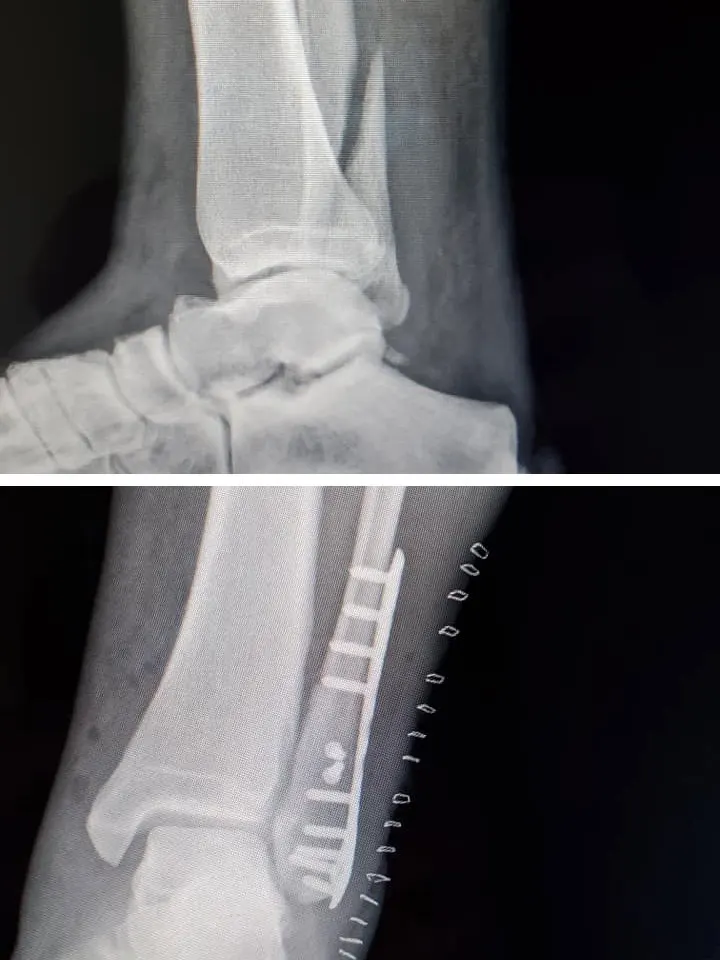
Recovery and Return to Activity
Healing time depends on the bone involved, the type of fracture and your overall health. Your podiatrist will track progress with follow-up visits and X-rays and let you know when it is safe to move out of the boot or cast and to add more activity.
Once the bone has healed enough, rebuilding strength, balance and range of motion helps you get back on your feet with confidence. Our in-office physical therapy can guide that process. For athletes and active patients, our sports medicine care focuses on a gradual, safe return to training and competition. Returning to high-impact activity too early can set back healing.
Preventing Stress Fractures
Stress fractures are often preventable. To lower your risk:
- Increase running distance, pace or training time gradually rather than all at once.
- Mix high-impact exercise with low-impact options such as swimming or cycling.
- Wear supportive shoes suited to your activity and replace them when they wear out.
- Ask about orthotics if foot shape or mechanics place extra stress on certain bones.
- Eat a balanced diet that supports bone health, and talk with your doctor about bone density if you have had repeated fractures.
- Do not push through foot pain that keeps coming back. Rest and get it checked.
When to See a Podiatrist
See a podiatrist right away if you cannot put weight on your foot, if the foot or ankle looks deformed, or if pain, swelling or bruising is severe after an injury. Make an appointment soon if you have pain over a bone that keeps returning with activity, which can be a sign of a stress fracture. If you have diabetes or reduced feeling in your feet, have any foot injury checked promptly, even if it does not hurt much.
Southernmost Foot & Ankle Specialists offers fracture care in Key West, Homestead and Coral Gables, and walk-ins are welcome. Call us toll-free at 855-300-6685 or find the office nearest you to have your injury evaluated.
Committed to Excellent Service
Our philosophy has been that the patient always comes first.
Walk-ins are welcome at our Coral Gables, Homestead and Key West offices.