
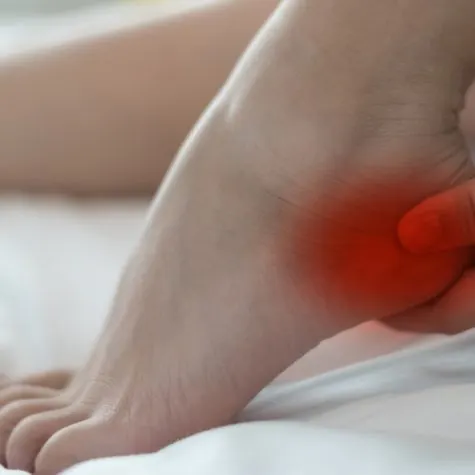
Heel Spurs
What Is a Heel Spur?
A heel spur, also called a calcaneal spur, is a small bony outgrowth on the heel bone (the calcaneus). Most heel spurs form on the underside of the heel, where the plantar fascia, the thick band of tissue that supports your arch, attaches to the bone. A spur can also develop at the back of the heel, where the Achilles tendon inserts.
A bone spur on the heel usually builds up slowly, over months or years, as the body responds to repeated pulling and pressure at that spot. Because the spur itself is bone, it is typically seen on an X-ray rather than felt from the outside.
Heel spur vs. plantar fasciitis
Heel spurs and plantar fasciitis often show up together, which is why the two are frequently confused. They are not the same thing:
- Plantar fasciitis is irritation and inflammation of the plantar fascia itself. It is a soft-tissue problem and a very common source of pain under the heel.
- A heel spur is a bony change at the heel bone. It may form in response to the same long-term strain that leads to plantar fasciitis.
Many people have a heel spur and never feel it. A spur is sometimes found by chance on an X-ray taken for another reason. When a person with a spur does have heel pain, the discomfort often comes from the irritated tissue around it rather than from the bone alone. That is why treatment usually focuses on calming that tissue, not on removing the spur. For a broader look at other reasons the heel can hurt, see our heel pain page.
Symptoms of Heel Spurs
When a heel spur is associated with pain, people commonly describe:
- A sharp or stabbing pain under the heel with the first steps in the morning
- Pain that returns after sitting for a while and then standing up
- A dull ache in the heel after long periods of standing, walking or running
- Tenderness when pressing on the bottom or back of the heel
- Mild swelling or warmth in the heel area
Pain that is sudden and severe after a fall or impact, numbness or tingling, or redness with fever are not typical of a heel spur and should be checked promptly.
Causes and Risk Factors
Heel spurs develop when the heel is exposed to repeated stress over time. Factors that can add to that stress include:
- Tight calf muscles or a tight Achilles tendon
- Flat feet, high arches or a walking pattern that places extra strain on the heel
- Running, jumping or sports that involve repeated impact, especially on hard surfaces
- Shoes that are worn out or lack arch support and cushioning
- Standing or walking on hard floors for long hours at work
- Extra body weight, which increases the load on the heel with every step
- Age, since the heel's natural fat pad can thin over time
How We Diagnose a Heel Spur
At Southernmost Foot & Ankle Specialists, diagnosis starts with a talk about your symptoms, activity and footwear, followed by a hands-on exam of the heel, arch and ankle and a look at how you stand and walk.
If a heel spur or another bone problem is suspected, we can take digital X-rays right in the office, often during the same visit. The images show whether a spur is present and where, and help rule out other causes of heel pain, such as a stress fracture.
Heel Spurs Treatment Options
Most people with a painful heel spur improve with conservative care. Treatment is usually step by step, starting with the simplest measures and adding more only when needed:
- Rest and activity changes. Cutting back on high-impact activity and switching to swimming or cycling for a while gives irritated tissue a chance to settle.
- Supportive footwear. Shoes with a cushioned heel, good arch support and a firm heel counter can reduce strain on the heel. Walking barefoot on hard floors often makes symptoms worse.
- Stretching. Regular calf, Achilles and plantar fascia stretches can ease the pull on the heel. Your podiatrist can show you which stretches to do and how often.
- Orthotics. Over-the-counter heel cups or inserts help some patients. When extra support or correction is needed, custom orthotics are made to the shape and mechanics of your feet.
- Taping or strapping. Taping the foot can support the arch and reduce stress on the heel during daily activities.
- Night splints. A night splint keeps the foot gently stretched while you sleep, which may help reduce morning heel pain.
- Anti-inflammatory medication. Over-the-counter or prescribed anti-inflammatories may help control pain and swelling for a short period. Ask your doctor what is appropriate for you.
- Injections. For persistent pain, a corticosteroid injection may be considered to reduce inflammation around the heel.
- Physical therapy. Our in-office physical therapy focuses on flexibility, strength and mechanics to reduce stress on the heel and help prevent the problem from returning.
- Laser therapy. Our practice offers laser treatment, which may be an option for some patients with ongoing heel pain.
- Surgery, in rare cases. When pain continues despite a full course of conservative care, surgery may be discussed. Depending on the case, it may involve releasing part of the plantar fascia and, less often, removing the spur.
Preventing Heel Spurs
You can lower the strain on your heels with a few everyday habits:
- Choose shoes that fit well, support the arch and cushion the heel, and replace them when they wear down.
- Wear footwear designed for your sport or activity.
- Stretch your calves and feet before and after exercise.
- Increase running distance or training intensity gradually.
- Avoid long periods barefoot on hard surfaces such as tile or concrete.
- Maintain a healthy body weight to reduce the load on your feet.
When to See a Podiatrist
Make an appointment with a podiatrist if heel pain lasts more than a few weeks, keeps coming back, makes it hard to walk, or gets worse despite rest and better shoes. Seek care sooner if the pain started after an injury, if you have numbness or tingling, or if you have diabetes or circulation problems.
Southernmost Foot & Ankle Specialists sees patients in Key West, Homestead and Coral Gables, and walk-ins are welcome. Call us toll-free at 855-300-6685 or find the office nearest you to have your heel evaluated and start a treatment plan that fits your life.
Committed to Excellent Service
Our philosophy has been that the patient always comes first.
Walk-ins are welcome at our Coral Gables, Homestead and Key West offices.