
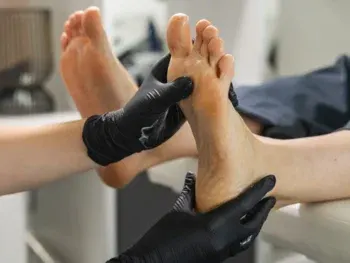
Ankle Sprain Physical Therapy: Exercises and Recovery

An ankle sprain happens when the ligaments that hold the ankle bones together are stretched or torn. Most sprains occur when the foot rolls inward, injuring the ligaments on the outside of the ankle.
Many people rest a sprained ankle until the pain fades and then go straight back to normal activity. The problem is that the ankle is often still weak, stiff and less stable than before, which makes another sprain more likely. Physical therapy for a sprained ankle helps restore motion, strength and balance so you can return to your activities with more confidence and a lower risk of re-injury.
Ankle Sprain Grades: How Bad Is Your Sprain?
Doctors usually grade ankle sprains by how much the ligaments are damaged:
- Grade 1 (mild): the ligament is stretched, with only small tears. You may have mild pain, swelling and tenderness, but you can usually walk.
- Grade 2 (moderate): the ligament is partly torn. Swelling and bruising are more noticeable, walking is painful and the ankle may feel somewhat loose.
- Grade 3 (severe): the ligament is completely torn. There is usually significant swelling and bruising, the ankle feels unstable and putting weight on it may be very difficult.
There is also a less common "high ankle sprain," which affects the ligaments just above the ankle joint. These injuries often take longer to heal and should be evaluated by a specialist.
The First 48 to 72 Hours After a Sprain
Early care helps control pain and swelling and sets the stage for rehab. For the first two to three days, focus on:
- Protection: avoid movements that cause sharp pain. A brace, wrap or crutches may be recommended if walking hurts.
- Rest: give the ankle a break from sports and long walks, while keeping the rest of your body moving.
- Ice: apply a cold pack wrapped in a thin towel for about 15 to 20 minutes at a time, several times a day. Never put ice directly on the skin.
- Compression: an elastic bandage can help limit swelling. Wrap it snugly but not tightly, and loosen it if your toes tingle, feel numb or change color.
- Elevation: raise your ankle above the level of your heart when you can, especially during the first day or two.
Do You Need an X-Ray? When a Sprain Might Be a Fracture
Not every twisted ankle needs an X-ray, but some signs suggest a possible broken bone. Get your ankle checked promptly if:
- You cannot put weight on the foot or take a few steps, either right after the injury or when you are examined
- There is pain when pressing on the bony bumps on either side of the ankle or on the bones of the midfoot
- The ankle or foot looks deformed, or swelling and bruising are severe
- You have numbness, tingling or a cold, pale foot
Our offices offer digital X-rays, so your podiatrist can often check for a fracture during the same visit. If a break is found, you will be guided through appropriate fracture care instead of a standard sprain program.
Why Physical Therapy Matters for Ankle Sprain Recovery
When a ligament is injured, it is not only the ligament that needs to heal. The small sensors in the ankle that tell your brain where your foot is in space (proprioception) are disrupted, the surrounding muscles weaken and the joint may stiffen. If these problems are not addressed, some people develop a pattern of repeated sprains and a feeling that the ankle "gives way."
A structured program of in-office physical therapy works on all of these areas. Your provider tailors the exercises to your sprain, your pain level and your goals, and adjusts them as you improve.
Phases of Ankle Sprain Rehab and Example Exercises
Rehab usually moves through several overlapping phases. The exercises below are common examples used in ankle sprain physical therapy. They are for general education only: start them under your provider's guidance, move slowly and stop if you feel sharp pain.
Phase 1: Calm the Ankle and Restore Range of Motion
Once the worst pain and swelling begin to settle, gentle movement helps prevent stiffness.
- Ankle alphabet: sit with your leg supported and your foot off the edge of a chair or bed. Using your big toe as a "pen," slowly trace the letters of the alphabet in the air. Keep the movement at the ankle and stay within a comfortable range.
- Towel stretch: sit on the floor with your leg straight. Loop a towel around the ball of your foot and gently pull it toward you until you feel a mild stretch in your calf. Hold for about 15 to 30 seconds and repeat a few times.
Phase 2: Strengthening
As motion returns, strengthening helps protect the ligaments while they heal.
- Resistance-band eversion: sit with your leg straight and loop an elastic band around the outside of your forefoot, holding or anchoring the other end toward the inside. Slowly turn your foot outward against the band, then slowly return. This works the muscles on the outside of the ankle that help prevent rolling.
- Heel raises: begin seated, lifting your heels while keeping your toes on the floor. When your provider says you are ready, progress to standing heel raises while holding a counter for support.
Phase 3: Balance and Proprioception
Balance training is one of the most important parts of preventing another sprain.
- Single-leg balance: stand next to a sturdy counter and lift your uninjured foot, balancing on the injured side. Start with short holds and use the counter as needed. Over time, your provider may make it harder by having you close your eyes or stand on a cushion.
You can see examples in our "Balance & Rehab Exercises" video on the videos page.
Phase 4: Return to Sport and Full Activity
The final phase prepares the ankle for the demands of your sport or job. It may include brisk walking, light jogging, figure-eight patterns, gentle hopping and sport-specific drills. Your provider will usually look for full motion, good strength and balance, and little or no swelling before clearing you to return. Athletes can get additional support through our sports medicine services.
How Long Does Ankle Sprain Recovery Take?
Every ankle heals at its own pace, and recovery depends on the grade of the sprain, your age, your activity level and how consistently you follow your rehab plan. As a general guide:
- Mild sprains often improve within one to three weeks.
- Moderate sprains may take several weeks.
- Severe sprains can take a few months, and some need a longer period of protection.
Even after pain is gone, strength and balance may not be fully back, which is why finishing your rehab program matters.
How to Prevent Re-Injury
- Keep up your balance exercises a few times a week, even after you feel better.
- Consider bracing or taping during sports for a period of time after the injury, as recommended by your provider. Our "Ankle brace instructions" video on the videos page shows how to put a brace on correctly.
- Wear supportive footwear that fits well and suits your activity, and replace worn-out athletic shoes.
- Do not rush back. Returning to sport before the ankle is ready is a common reason for repeated sprains.
In-Office Physical Therapy at Southernmost Foot & Ankle Specialists
At Southernmost Foot & Ankle Specialists, your ankle can be evaluated, X-rayed and treated under one roof. Our podiatrists assess the injury, rule out fractures and create a rehab plan, and our in-office physical therapy helps you progress safely through each phase of recovery. We see patients at our offices in Key West, Homestead and Coral Gables, Florida, and walk-ins are welcome.
When to See a Podiatrist for a Sprained Ankle
See a podiatrist if:
- You cannot bear weight on the ankle, or the pain is severe
- Swelling and bruising are significant or are not improving after a few days
- Your ankle feels unstable or keeps "giving way"
- You have numbness, tingling or changes in skin color
- You have diabetes or circulation problems
Call us toll-free at 855-300-6685 or schedule an appointment online to start your recovery with a specialist.
Ankle Sprain Recovery FAQ
Should I walk on a sprained ankle?
It depends on the severity. With a mild sprain, gentle walking is often allowed as pain permits. If you cannot bear weight or walking is very painful, have your ankle checked to rule out a fracture before putting weight on it.
Is ice or heat better for a sprained ankle?
Ice is generally used during the first few days to help with pain and swelling. Ask your provider before using heat, especially while the ankle is still swollen.
When can I start ankle sprain physical therapy exercises?
Gentle range-of-motion exercises often begin once the initial pain and swelling start to ease, sometimes within a few days. Your provider will tell you when it is safe to start and when to progress to strengthening and balance work.
Do I need to wear an ankle brace?
A brace can protect the ankle while it heals and during sports afterward. Your provider can recommend whether you need one, which type and for how long.
Why does my ankle keep spraining?
Repeated sprains often happen when the ankle has not fully regained its strength and balance after a previous injury. A complete rehab program, and in some cases further evaluation, can help break that cycle.
Last News



Committed to Excellent Service
Our philosophy has been that the patient always comes first.

Emergency Operator
24 Hours
Get emergency care from a specialist right from the start. Don´t go to an urgent care, ER or general doctor. Come straight the specialist